Edible fats and oils serve various essential functions in human nutrition. They act as a source of high energy and provide essential fatty acids, such as linoleic and linolenic acids. For these reasons, safety challenges regarding fats and oils must be considered carefully.
Fats and oils play a vital role as a significant source of energy. They are essential for our bodies to absorb certain vitamins and nutrients. Furthermore, fats and oils play a crucial part in food production, contributing to product design, preservation, and acting as carriers of texture and flavor.
Safety and Quality Challenges of the Four Types of Fats and Oils

- Vegetable oils
- Lauric acid fat (ex. palm, coconut)
- Vegetable butters (ex. cocoa)
- Oleic – linoleic acid fats (ex. cottonseed, corn, peanut, sunflower, palm, olive, and sesame oils…)
- Linoleic acid fats (ex. soybean, rapeseed, wheat germ, hempseed…)
- Milk fat (ex. buffalo, cow, goat, sheep…)
- Animal body fats (ex. lard, tallow…)
- Marine oils (ex. algae, fish, fish liver, crustacean, molluscan…)
Vegetable Oils
Vegetable oils are widely used in processed goods or sold directly for human consumption. The EU is a major global producer of olive oil, but it also processes rapeseed, sunflower seed, and soybeans. While the local growth supports rapeseed and sunflower seed, soybean crushing depends on imports. European refineries mostly handle EU oils but supplement with tropical oils like palm, palm kernel, and coconut oils. Visual inspection cannot easily differentiate vegetable oils, as they share physical and chemical similarities, making them interchangeable in the food industry. Their fatty acid, triacylglycerol, and/or sterol composition can differentiate some oils. Some vegetable oils, like olive oil, Argan, and camellia, command higher prices due to their origin, production methods, composition, and perceived health benefits. However, certain oils, including EVOO, are prone to adulteration with refined seed oils, leading to potential loss of benefits and mislabeling fraud.
Milk Fat
Milk fat is known for its complex fatty acid composition, with over 400 individual fatty acids identified. It serves as a carrier for fat-soluble vitamins A, D, E, and K. The lipid content in milk fat varies significantly among different mammalian species and includes bioactive compounds such as triacylglycerides, diacylglycerides, saturated and polyunsaturated fatty acids, and phospholipids. The unique composition of bovine milk fat, which contributes to its plasticity, makes it a sought-after commodity for producing butter and as a food ingredient.
Animal Body Fats
The meat processing industry obtains animal fats as co-products or by-products from fresh slaughter by-products suitable for human consumption. These fats undergo thermal processing to produce both edible and inedible animal fats. Edible fats find applications in the feed and pet food industry, while inedible fats are utilized in feed, pet food, oleochemistry, biodiesel production, or energy generation. Examples of typical edible fats include beef tallow, pork lard, goose, or duck fat.
Marine Oils
Fish body oils dominate the marine oils produced globally, although a small amount also comes from fish and shark livers, krill, squid, marine mammals, marine and freshwater algae, and yeasts. These oils and fats contain minor non-triglyceride substances, some of which act as antioxidants to prevent oxidation (e.g., tocopherols and astaxanthin in salmon and krill oils). However, other impurities may cause undesirable coloration during processing. Certain compounds once considered undesirable, like the carotenoid astaxanthin (responsible for pink pigment in farmed salmon) and omega-3 fatty acids, are now considered desirable.

The physical and chemical properties of edible fats and oils play a crucial role in determining the quality of final products, necessitating thorough evaluation. The fat and oil industry encounters numerous challenges related to both composition and the presence of contaminants.
The physical characteristics of edible fats and oils encompass color, specific gravity, refractive index, melting point, congealing point, smoke point, flash point, fire point, and viscosity. On the other hand, the chemical characteristics include acid value, saponification value, iodine value, fatty acid composition, trans isomers, triacylglycerol composition, unsaponifiable matters (such as sterols and tocopherols), and minor components (such as phospholipids, chlorophyll pigments, and glycidyl fatty acid esters). Indexes of edible fats and oils deterioration consist of peroxide value, p-anisidine value, carbonyl value, polar compounds, and polymerized triacylglycerols.
Crude oils and fats may contain pesticide residues, polycyclic aromatic hydrocarbons (PAHs), mineral oil hydrocarbons, mycotoxins, etc. The risk for the presence of a contaminant depends on the supply chain practices. Crude oils are normally refined before food use to improve taste and appearance. The refining process reduces the content of most of these contaminants.
Mérieux NutriSciences provides comprehensive support to the Fats and Oils Industries at every stage of the supply chain

Our Services Dedicated to Fats and Oils Safety Challenges
Mérieux NutriSciences offers a comprehensive range of specialized services to support the fat and oil industry. These services include analysis, consulting, labeling services, nutrient profiling, and fraud detection for raw, intermediate, by-products, and finished products. With our extensive experience, we take into account the natural variations, variety-specific characteristics, and, when applicable, technologically induced variations.
Our laboratories are experts in analyzing process and environmental contaminants such as glycidyl fatty acid esters (GE), 3-monochloropropanediol (3-MCPD), 2-monochloropropanediol (2-MCPD) and their fatty acid esters, dioxin, PCBs, and Polycyclic aromatic hydrocarbons (PAHs).
Key Regulations on Fats and Oils
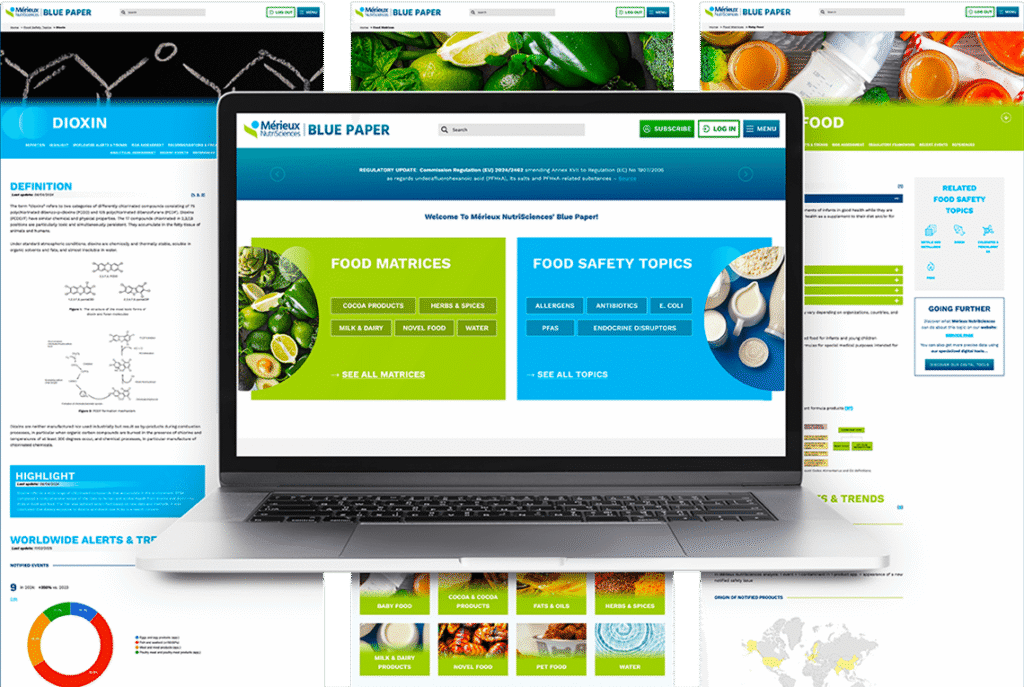
Blue Paper: Fats & Oils
Access exclusive insights from our Fats & Oils experts on the Blue Paper platform, including analyses of food safety, quality and sustainability trends and regulatory updates.