Tackling Food Risks: A Deep Dive into the Alert & Cooperation Network – ACN 2023 Annual Report

In 2023, food safety notifications across European networks increased, according to the Alerts and Cooperation Network (ACN) report.
The Alert and Cooperation Network Report includes four major networks:
- The Rapid Alert System for Food and Feed (RASFF)
- The Administrative Assistance and Cooperation (AAC)
- The Food Fraud Network (FFN)
- The newly introduced Plant Health Network (PHN).
Leading the notifications were Germany, the Netherlands, and Belgium.
Key Insights from the RASFF System
The RASFF enables food safety authorities to exchange information on risks related to food, feed, or food contact materials. In 2023, the system saw an 8% increase in notifications, totaling 4,695. Among these, 4,199 notifications pertained to food, 303 to feed, and 193 to food contact materials. By type of notification, alerts rose by 9% from 2022, information for follow-up by 23%, information for attention by 6%, and border rejections by 2%.
Major issues reported included:
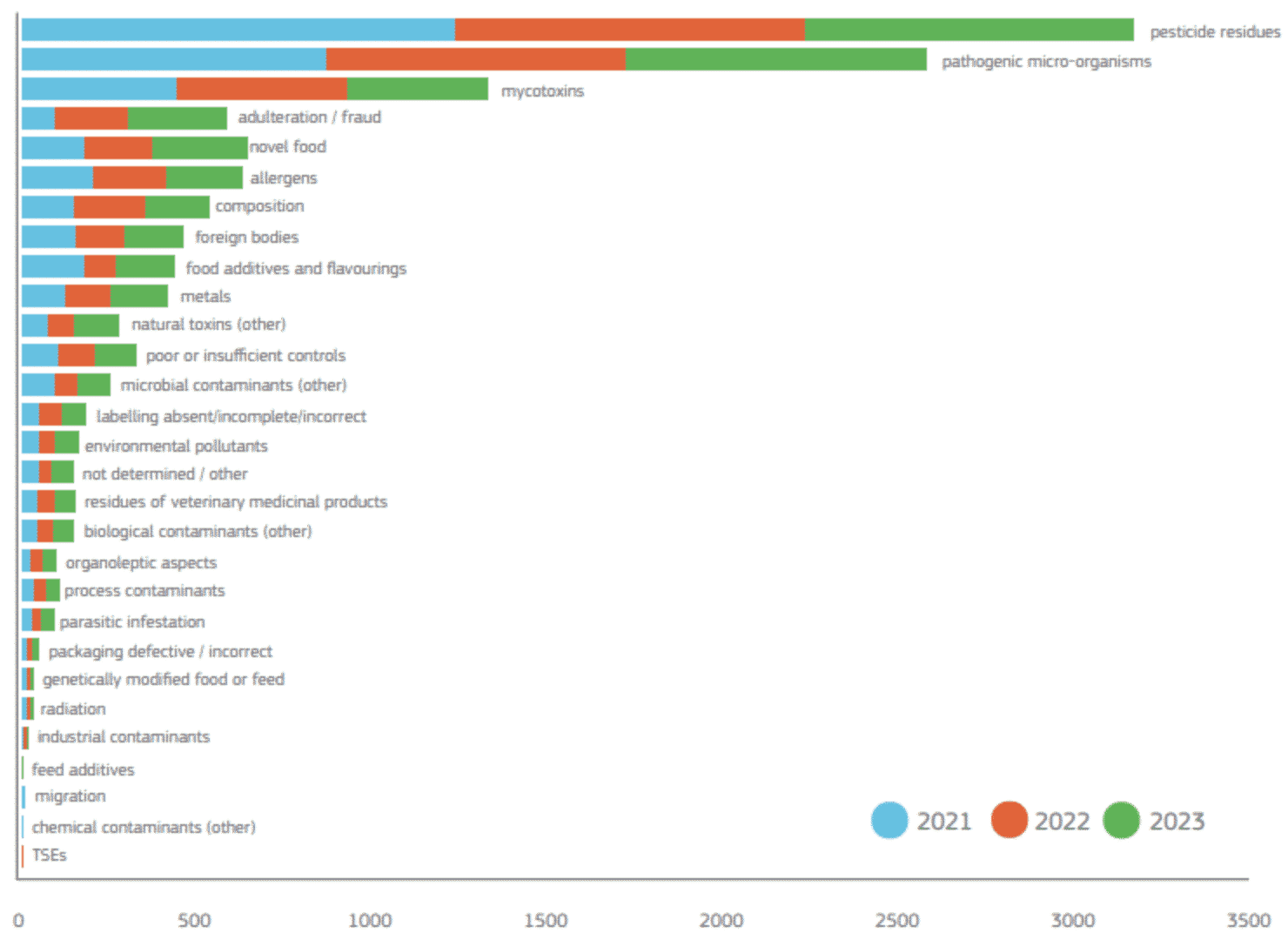
- Pesticide residues: 936 notifications
- Pathogenic microorganisms: 856 notifications
- Mycotoxins: 401 notifications
Over a third of these notifications concerned border rejections, with pesticide residues in fruits and vegetables consignments from Türkiye, Egypt, and India being the most common. The top countries of origin for these issues were Poland, the Netherlands, and France (within the EU) and Türkiye, China, and India (outside the EU).
| HAZARD | PRODUCT CATEGORY | ORIGIN | NOTIFICATIONS |
| Pesticide residues | Fruits and vegetables | Türkiye | 168 |
| Salmonella | Poultry and poultry products | Poland | 153 |
| Migration | Food contact materials | China | 92 |
| Aflatoxins | Nuts, nut products and seeds | United States | 85 |
| Pesticide residues | Fruits and vegetables | Egypt | 84 |
| Pesticide residues | Herbs and spices | India | 51 |
| Pesticide residues | Cereals and bakery products | India | 48 |
| Salmonella | Nuts, nut products and seeds | Nigeria | 38 |
| Vibrio | Crustaceans and crustacean products | Ecuador | 36 |
| Pesticide residues | Cereals and bakery products | Pakistan | 34 |
Top Recurring Issues in RASFF
Pesticides
The most frequently reported pesticides were:
- Chlorpyrifos (299 cases)
- Acetamiprid (75 cases)
- Ethylene oxide and 2-chloroethanol (67 cases)
Pathogenic Microorganisms
Reports most frequently identified poultry meat and poultry products as sources of pathogenic microorganisms, with Salmonella (583 cases) and Listeria monocytogenes (131 cases) topping the list.
Mycotoxins
Notifications related to mycotoxins decreased by 17% compared to 2022. Aflatoxins were the main concern with 331 notifications, and the United States was the most reported origin (85 notifications).
Foodborne Outbreaks & Notifications in Feed
In 2023, there were 48 notifications concerning foodborne outbreaks. Norovirus was identified as the probable cause in 17 cases, followed by Salmonella in 11 cases, Listeria monocytogenes in 5 cases, histamine poisoning in 2 cases, and Escherichia coli in 2 cases.
Notifications on Feed & Food Contact Materials
In 2023, RASFF issued 303 notifications concerning feed, with Salmonella being the most commonly reported hazard (111 notifications). For food contact materials, there were 193 notifications, 36% of which were related to the migration of substances like primary aromatic amines. Most of these products originated from China.
Administrative Assistance & Cooperation (AAC) Network
The AAC enables Member States to notify violations of EU food safety legislation that do not pose an immediate health risk. In 2023, notifications increased by 24%, reaching 3,166. Most notifications (63%) were related to non-compliant composition in fruits and vegetables, mainly due to pesticide residues exceeding the Maximum Residue Level (MRL). Mislabeling made up 32% of the notifications.
The European Commission properly evaluates any AAC notification with potential health risks and, if necessary, escalates it to the RASFF system.
Food Fraud Network (FFN)
The FFN investigates cases where authorities suspect fraudulent or deceptive practices. In 2023, notifications in the FFN rose by 26.3%, with 758 fraud suspicions. The illegal trade of cats and dogs continued to be a significant issue, accounting for 414 of the fraud cases. Other concerns included meat substitution, honey adulteration, and mislabeled olive oil.
Additionally, 1,075 AAC notifications and 1,625 RASFF notifications were flagged as potential fraud, prompting deeper inspections or investigations by Member States.
Fraud Categories
In 2023, authorities reported adulteration/product tampering as the top category, accounting for 40.4% of the total food fraud notifications. Meanwhile, meat and meat products (excluding poultry) covered 13.3% of the total notifications, with issues such as ingredient or species substitution and misleading labeling being common.
EU Enforcement on Illegal Plant Protection Products
In May 2023, the European Commission, through DG SANTE, initiated an EU enforcement action on illegal plant protection products. This action, which will last until April 2024, aims to crack down on the use of unapproved pesticides.
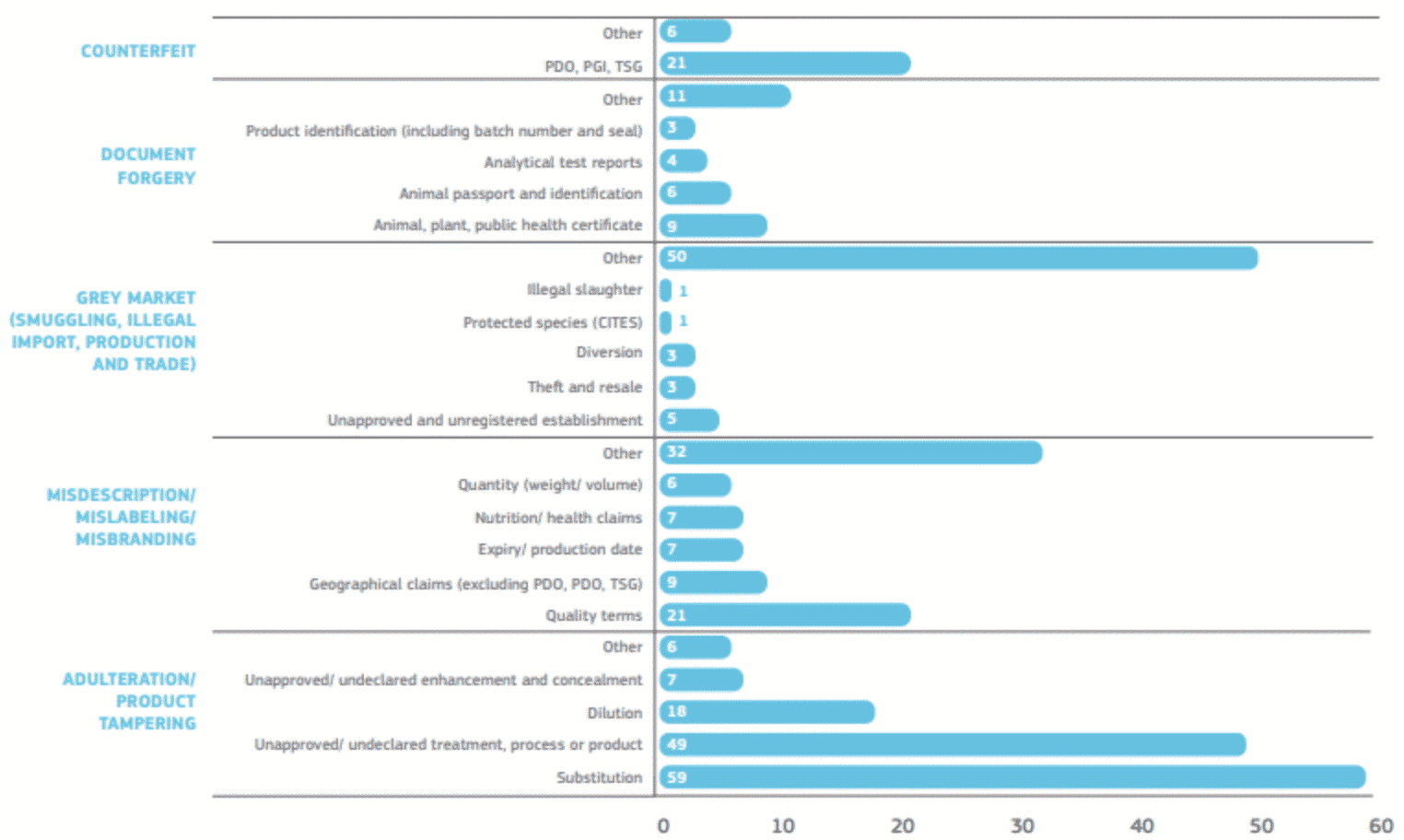
Food fraud notifications by agri-food fraud categories and subcategories
The use of pesticides not approved in the EU remained the most common non-compliance issue in 2023, with 434 notifications. The RASFF registered 761 notifications, with Chlorpyrifos being the most frequently reported pesticide (282 notifications). These substances are not approved for use in the EU, which could indicate fraudulent practices.
Fraud Suspicion in Dietetic Products, Supplements & Fortified Foods
In 2023, fraud suspicions were identified in 441 cases related to dietetic products, food supplements, and fortified foods. This category ranked second in terms of fraud notifications, following fruits and vegetables with 804 cases. The main fraudulent practices included:
- The use of unauthorized novel foods (195 cases, including 97 involving cannabinoids)
- Unauthorized processes, treatments, or products (89 cases)
- Unauthorized claims regarding nutrition and health (76 cases)
70% of fraud suspicions involved products from outside the EU.
Plant Health Network (PHN)
The PHN, introduced in 2023, covers information on plants, plant products, and other objects. In its first year, it generated 128 notifications. These mainly concerned non-compliant consignments of plants, plant products, and other items such as seeds, fruits, vegetables, wood, and flowers, as well as other plant health concerns.
Alert & Cooperation Network Report: Focus for 2024 & Beyond
Looking ahead, the European Commission has outlined several key priorities for 2024 and beyond:
- Enhanced surveillance of foodborne pathogens: This includes responding to changing environmental conditions that may increase the prevalence of bacterial contamination.
- Sustainability in food production: There will be a greater focus on reducing the use of harmful chemicals and promoting organic practices.
- Stricter enforcement of regulations: This will target allergens and undeclared ingredients to protect vulnerable consumers.
Is Your Business Prepared?
Have you assessed your raw materials and food chain? Did you include this updated information in your risk assessment for sourcing raw materials? Are your business practices aligned with the sustainability policies in Europe?
Our team of analytical and regulatory experts can help you adjust your control plans and your HACCP to manage the risks in sourcing raw materials.
Find out more: