In the meat products sector, a distinction is made between red and white meats. Red meats include cattle (beef and veal) and sheep (lamb, mutton etc.). White meats represent pork and poultry meats (chicken, turkey, duck).
For several years, individual meat consumption has been declining. This development is linked to increasing demands on health, animal welfare, sustainability and changes in consumption habits. These societal expectations are having an increasing impact on the meat industry and have led to the appearance of new alternative products on the market, such as meat of plant or artificial origin. The processes of the meat products industry are thus increasingly complex.
Types of meat and meat products
The different types of meat and meat products :
- Fresh processed meat products
- Carcasses and cut products
- Minced meat
- Raw- cooked meat products (frankfurt, mortadella,…)
- Precooked-cooked products (blood sausage, liver sausage, comed beef,…)
- Raw (dry) – fermented products (embutido-salami, chorizo, ham, …)
- Dry meat
Regulatory Framework of meat and meat products
- Regulation (EC) No 1760/2000 labeling of beef and beef products
- Regulation (EC) No 1825/2000 labeling of beef and beef products
- Regulation (EC) No 853/2004 hygiene rules for food of animal origin
- Regulation (EC) No 2073/2005 microbiological criteria for foodstuffs
- Regulation (EU) No 37/2010 Pharmacologically active substances – veterinary drugs in foodstuffs of animal origin
- Regulation (EC) No 470/2009 Residue limits of pharmacologically active substances in foodstuffs of animal origin
- Regulation 1169/2011 on the provision of food information to consumers
- Regulation (EC) No 1333/2008 food additives
- Regulation (EU) 2023/915 contaminants in foodstuffs
Countries’ regulations are in place in most of the EU countries.
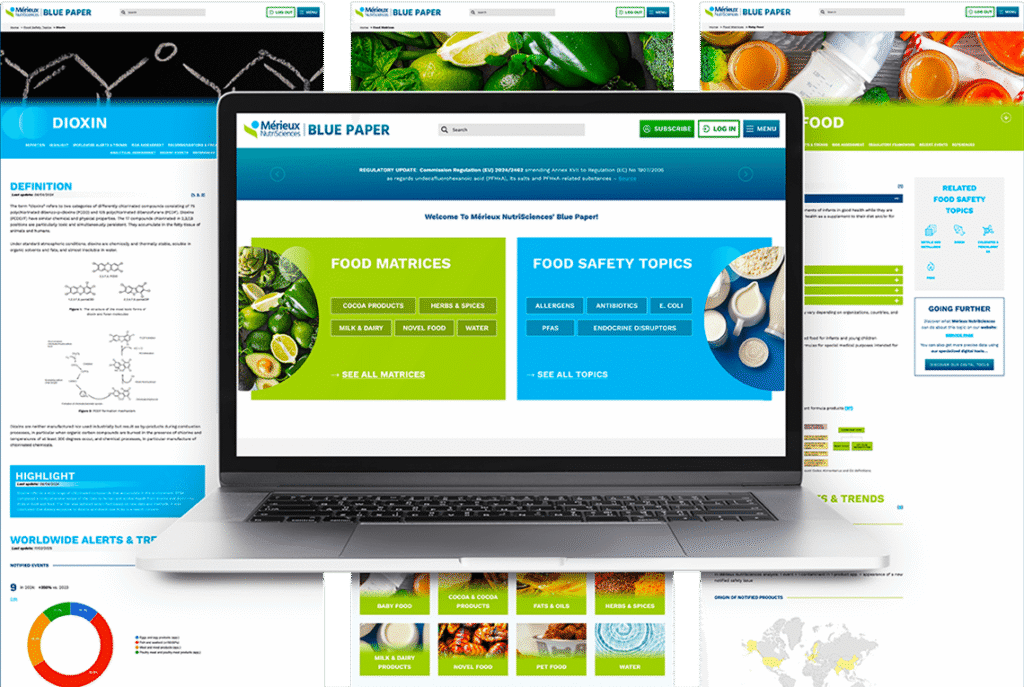
Blue Paper: Meat and meat products
Access exclusive insights from our Meat experts on the Blue Paper platform, including analyses of food safety, quality and sustainability trends and regulatory updates.