Veterinary drugs or veterinary medicinal products are substances used to prevent or cure disease in food-producing animals. Veterinary drug residues, or their metabolites, may persist in certain tissues of the animal and in products obtained from them, potentially entering the human food chain.
The inappropriate use of these compounds and their presence in various foods of animal origin can lead to bacterial resistance and allergic reactions. Studies have shown that consumption of products from animals treated with veterinary drugs is a significant source of unintended antibiotic intake by humans.
Regulation & Control of Veterinary Drugs
The European Medicines Agency (EMA) assesses Maximum Residue Limits (MRLs) for veterinary medicinal products marketed in the EU. Regulation (EU) 37/2010 classifies pharmacologically active substances into allowed and prohibited categories:
Allowed Substances with MRLs
Allowed Substances:
Antiparasitic agents: agents acting against endo-/ectoparasites, protozoa.
AMR is the ability of bacteria to become increasingly resistant to an antibiotic drug to which they were previously susceptible. Antibiotic resistance genes develop as a consequence of natural selection and genetic mutations.
According to the FAO and WHO, antibiotic resistance is a major global threat that is of increasing concern for human and animal health. The presence of increasingly resistant microorganisms in agri-food chains represents a potential route of exposure for animals, the foodstuffs derived from them, and therefore for consumers.
To mitigate risks, preventive measures from production to consumption are essential:
In animal husbandry: Reduce the use of antibiotics and consider alternatives to medication such as probiotics, prebiotics, or vaccines. Manage herds according to precise hygiene and disease control guidelines to prevent the development of antibiotic resistance.
During processing: Implement Good Hygiene Practices (GHP) and give priority to raw materials treated only with necessary veterinary medicines.
At the point of consumption: Emphasize personal hygiene and maintain cleanliness in processing and cooking areas. Give preference to untreated food when possible.
MRLs & recommendations on risk management for residues of veterinary medicines in food:
Maximum residue limits and recommendations on risk management for residues of veterinary medicines in food were established in Codex Alimentarius in CX-MRM 2-2018 and are now updated in the Codex Veterinary Drug residue database.
Regulation (EU) 37/2010 is the framework regulation defining pharmacologically active substances and their classification regarding maximum residue limits in food of animal origin.
Regulation (EU) 2019/6 lays down rules for the placing on the market, manufacturing, import, export, supply, distribution, pharmacovigilance, control, and use of veterinary medicinal products, and strengthens the EU’s campaign to tackle resistance to antibiotics.
The aim is to promote the informed and responsible use of veterinary medicines, strengthen the market, and ensure the availability and accessibility of these medicines, while ensuring the highest level of protection of animal, human, and environmental health.
Regulation (EU) 2021/808 establishes requirements and criteria for the performance of analytical methods for residues of pharmacologically active substances used in food-producing animals and for the interpretation of results, as well as for the methods to be used for sampling.
Regulation (EU) 2017/625 of the European Parliament and of the Council of 15 March 2017 concerns official controls and other official activities performed to ensure the application of food and feed law, rules on animal health and welfare, plant health, and plant protection products.
Veterinary Drug Residues: our Analytical Services
Mérieux NutriSciences provides a comprehensive analytical service, offering multi-residue profiling through high-performance liquid chromatography with a triple quadrupole mass detector for various food matrices, feed, pet food, and biological fluids.
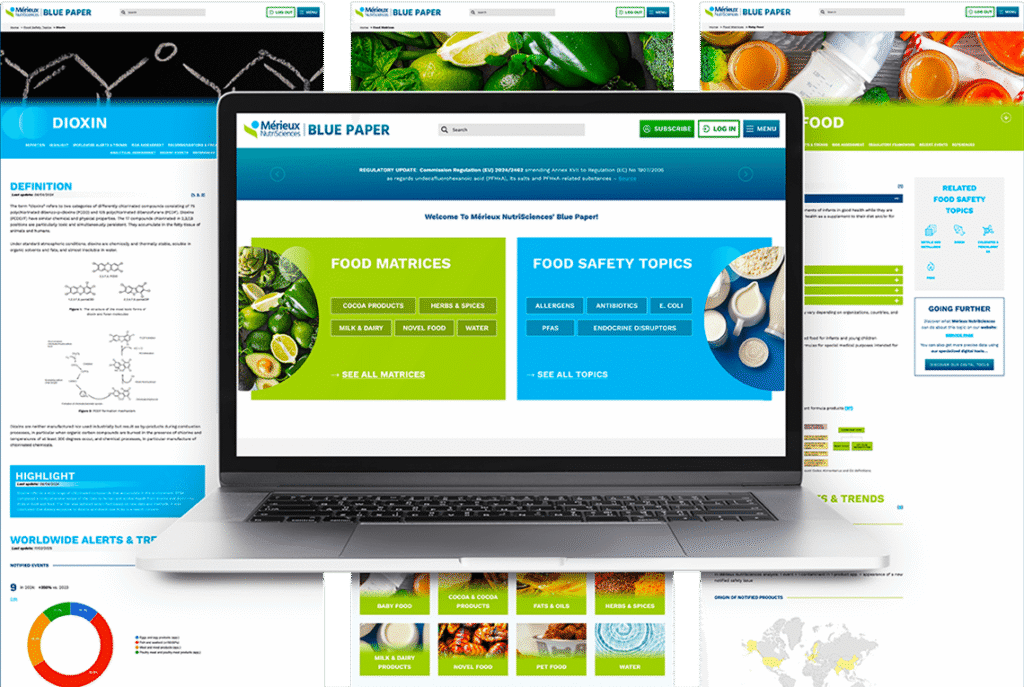
Access exclusive insights from our Antibiotics experts on the Blue Paper platform, including analyses of food safety, quality and sustainability trends and regulatory updates.