At a glance: Allergen management is the set of risk assessments, testing, and labelling controls that food businesses use to detect allergens, prevent cross-contamination, and meet legal declaration requirements such as EU Regulation 1169/2011. Mérieux NutriSciences provides qualitative and quantitative allergen testing using PCR, ELISA and LC-MS/MS across food, surface and environmental samples, under ISO 17025 accreditation.
Food allergies and intolerances pose significant challenges for consumers, food manufacturers, and regulatory authorities. Despite affecting a relatively small portion of the population, the impact on human health can be severe. This is why organizations like EFSA and FDA mandate proper allergen labeling in food products to mitigate health risks. Undeclared allergens are a leading cause of food product recalls in the EU and the USA.
Undeclared (on label) or unexpected allergens (cross-contamination) present a major threat to food product’s safety. Adequate control of allergens by operators is crucial to:
Protect brand from the risks and damages associated with product recalls
Effective Allergen Management
Food manufacturers need to conduct thorough risk assessments, utilize reliable testing services, and employ knowledgeable experts in national and international allergen regulations.
Producers, manufacturers, packers and distributors of food products or ingredients have the obligation to declare:
any ingredient or processing aid listed in Annex II or derived from a substance or product listed in Annex II causing allergies or intolerances used in the manufacture or preparation of food and still present in the finished product, even if in an altered form.
Importance of Analytical Assessment in Allergen Management
Accurate and reliable analytical assessment of allergens is crucial for various purposes, including:
Monitoring plans
Verification of food safety programs
Process validation
Raw material substitution
Environmental sample control
A Comprehensive Analytical Service on Allergens
Mérieux NutriSciences offers qualitative and quantitative testing methods, utilizing cutting-edge technologies such as PCR, ELISA, and LC-MS/MS. Regular Ring and Proficiency Tests guarantee the highest level of precision when conducting analytical determinations.
ELISA and PCR Techniques
ELISA detects allergenic proteins, while PCR reveals DNA from food allergens. These routine techniques, continually optimized by Mérieux NutriSciences’ R&D division, are effective across various matrices.
LC-MS/MS Technology
We employ LC-MS/MS technology for multi-allergen testing, a method recognized by organizations such as AOAC, ILSI, and MONIQA. This approach directly determines allergenic peptides, making it suitable for analyzing processed foods with denatured proteins such as bakery products.
Mérieux NutriSciences proposes accredited tests, with ongoing efforts to extend accreditation to additional targets and matrices. The portfolio covers allergen analysis in food, surfaces, and environmental samples (accreditation ISO17025).
Allergen Management Solutions
Thanks to our portfolio of testing technologies and solutions, we support our customers with dedicated services for consistent food allergens management:
Allergen Risk Assessment
In recent years, food producers have taken numerous actions to manage allergen risks, particularly through Hazard Analysis and Critical Control Points (HACCP)—a system for detecting, assessing, and managing food safety risks. This involves establishing a process to manage raw materials, flows, and other factors, requiring the active involvement of company personnel. Audits, process validations, and monitoring plans are essential components of this system.
While testing is integral, it alone is insufficient to minimize risks associated with allergens. Mérieux NutriSciences goes beyond testing by conducting audits and implementing training programs for employees, assisting in the development of a comprehensive control plan for allergen risk management.
If you’re seeking a different type of test, inquire about our full range of available analyses. For more information on the support provided by ISO-accredited laboratories for quality and food security programs, please reach out to us.
Labeling and Regulatory Services
Review of technical sheets and check of food labeling
Consulting to answer any question regarding regulatory requirements
We are continually expanding the scope of our accredited tests, and improving our quality system (calibration, proficiency tests, internal and crossed-reference quality controls) to provide our customers with the most accurate and reliable service.
Why trust our allergen testing
ISO 17025 accredited testing – our allergen analyses for food, surfaces and environmental samples are performed under ISO 17025 accreditation, with ongoing extension to additional targets and matrices.
Validated analytical methods – qualitative and quantitative testing using PCR, ELISA and LC-MS/MS.
Verified precision – regular ring tests and proficiency tests confirm the reliability of our results.
Regulatory expertise – testing aligned with EU Regulation 1169/2011 and guidance from authorities such as EFSA and FDA.
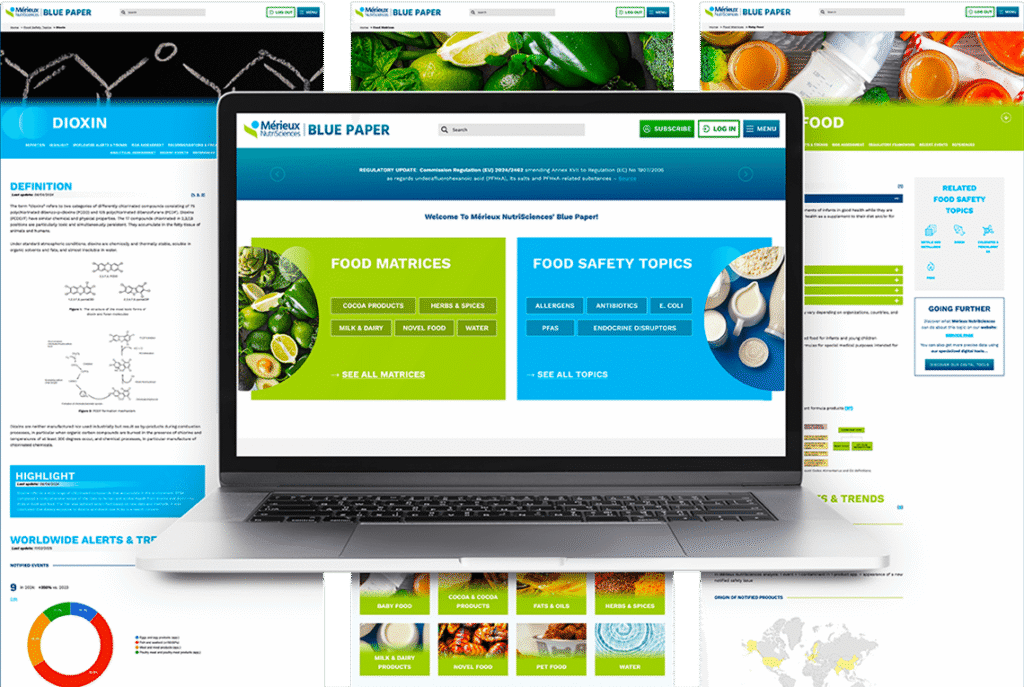
Access exclusive insights from our Allergens experts on the Blue Paper platform, including analyses of food safety, quality and sustainability trends and regulatory updates.
Frequently Asked Questions about Allergen Management
Allergen management is the combination of risk assessment, reliable testing, and regulatory expertise that food businesses use to control declared and undeclared allergens. Effective control helps protect consumers, comply with regulations, obtain certifications such as IFS or BRC, and reduce the risk and cost of product recalls.
Under EU Regulation 1169/2011 (Annex II), any ingredient or processing aid derived from a listed allergenic substance must be declared if it is still present in the finished product, even in altered form. Annex II covers 14 allergens: cereals containing gluten, crustaceans, eggs, fish, peanuts, soybeans, milk, tree nuts, celery, mustard, sesame seeds, sulphur dioxide and sulphites, lupin, and molluscs.
Undeclared allergens on labels and unexpected allergens from cross-contamination are a leading cause of food product recalls in the EU and USA. Accurate analytical assessment supports monitoring plans, verification of food safety programs, process validation, raw material substitution, and environmental sample control.
Mérieux NutriSciences uses qualitative and quantitative methods based on PCR, ELISA, and LC-MS/MS technologies. Regular ring tests and proficiency tests are used to maintain precision in analytical determinations.
The allergen portfolio covers food products, surfaces, and environmental samples, supporting uses such as environmental sample control and verification of cleaning and food safety programs.
Yes. Mérieux NutriSciences offers accredited tests under ISO 17025, with ongoing efforts to extend accreditation to additional targets and matrices.
Both are adverse reactions to specific foods, and EU labelling rules cover substances causing allergies or intolerances. The prevalence of intolerances to gluten and lactose is rising. Common allergens and intolerance triggers include eggs, milk, soy, fish, peanuts, nuts, shellfish, crustaceans, gluten, and lactose.