2- and 3-monochloropropane-1,2-diol (2- and 3-MCPD) are food process contaminants. 2-MCPD, 3-MCPD, and glycidyl esters (GEs) are contaminants formed from natural food constituents when heat is applied in the production process.
Producers derive edible oils, including vegetable oils and fish oils, from various commodities such as fruits, seeds, nuts, and fish. Refining of edible oils (at temperatures of about 200°C or higher) can produce 3-MCPD esters and GEs.
Exposure to 3-MCPDEs and GEs can occur through consumption of refined oils and various food products containing refined oils, such as infant formula, dietary supplements, fried potato products, and bakery products. Some recent studies also suggest that they can be found in food supplements containing fish, algae, or krill oils.
These contaminants are either formed together with the flavoring substances, which are of great importance for food quality and taste, or they are built during the refining process of food raw materials. In practice, it is difficult to avoid these compounds while assuring consumer expectations and ensuring the quality and safety of the product.
Risk Assessment & Exposure
EFSA’s expert panel on contaminants first assessed the potential risks of 3-MCPD and glycidyl esters (GE) in 2016. They concluded that GEs are a concern for public health because they are genotoxic and carcinogenic, i.e., they can damage DNA and cause cancer.
Read more about 3-MCPD risk assessment and exposure
3-MCPD has been classified as a possible human carcinogen, while the toxicity of 2-MCPD is still under study. In January 2018, EFSA’s scientific opinion revealed that these esterified forms undergo extensive hydrolysis upon ingestion, generating high amounts of toxic MCPD. EFSA and JECFA (The Joint FAO/WHO Expert Committee on Food Additives) assessed the health risks and established thresholds for TDI (Tolerable Daily Intakes), not excluding an increased health risk for more vulnerable population groups such as infants and children.
This issue primarily affects vegetable oils and fats, as well as derived foods like bakery products. Notably, palm oil, a common ingredient in many foods, including those for children, was found to contain 6-10 times more MCPD and glycidyl esters (GE) than other oils. This discovery has sparked considerable concern and prompted changes in the formulation of certain foods.
The German Federation of Food Law and Food Science (BLL) published the “Toolbox for Mitigation of 3-MCPD Esters and Glycidyl Esters in Food,” a compilation of strategies aimed at reducing the presence of these contaminants. The proposed strategies include tools for improving agricultural practices and the production and processing of vegetable oils, as well as guidelines for selecting and/or reducing the use of oils in product formulations. Additionally, guidelines are provided to minimize the presence of these contaminants in food processing, both in catering and households.
Regulatory Framework
Regulation (EU) 2023/915 establishes the maximum levels of 3-MCPD, 3-MCPD esters, and GEs in foodstuffs, including:
Vegetable oils and fats
Fish oils and oils from marine organisms
Hydrolyzed vegetable protein
Soy sauce
Infant formula
Follow-on formula
Foods for special medical purposes intended for infants and young children
This regulation includes the 2018 Regulation (EU) 2018/290 and the 2020 Regulation (EU) 2020/1322, addressing maximum levels of 3-MCPD, 3-MCPD fatty acid esters, and glycidyl fatty acid esters in certain foods.
Our Analytical Services to address MCPDs & Glycidyl Esters
Mérieux NutriSciences offers a comprehensive analytical service to monitor the presence of free, esterified, and GE MCPD in food through GC-MS/MS. Our service covers:
2-MCPD (2-monochloropropane-1,2-diol)
3-MCPD (3-monochloropropane-1,2-diol)
2-MCPD esters (fatty acid esters of 2-monochloropropane-1,2-diol)
3-MCPD esters (fatty acid esters of 3-monochloropropane-1,2-diol)
GE (glycidyl esters of fatty acids)
In addition, for the determination of 2- and 3-MCPD esters and GE in baby food and infant formula matrices, we apply the official AOAC method 2018.03 according to specific requirements and limits.
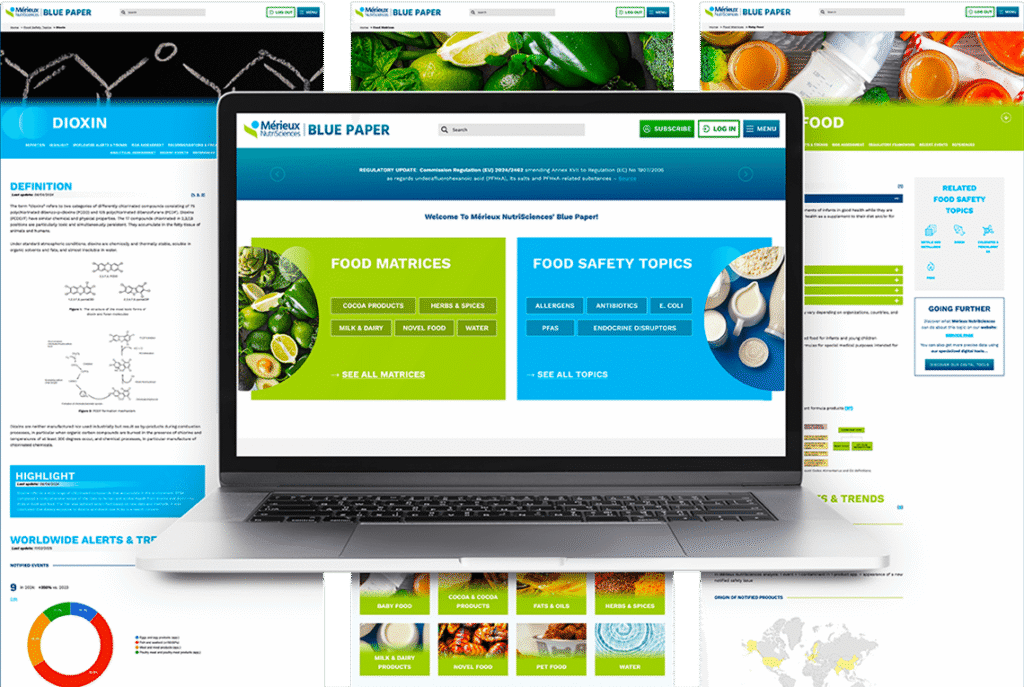
Access exclusive insights from our MCPD & Glycidyl Esthers experts on the Blue Paper platform, including analyses of food safety, quality and sustainability trends and regulatory updates.