Food manufacturers deal with challenges in identifying and preventing mineral oil hydrocarbons (MOH) in products, as these contaminants pose risks to human health. The EFSA categorizes MOH into two types: MOSH (Mineral Oil Saturated Hydrocarbons) and MOAH (Mineral Oil Aromatic Hydrocarbons). Our experts employ advanced chromatography for MOSH and MOAH analysis, swiftly detecting potential contamination even during food processing, ensuring a safe supply chain.
Our Services Dedicated to MOSH and MOAH
Mérieux NutriSciences operates world-leading laboratories dedicated to the development and execution of MOSH/MOAH analysis. We successfully devised and standardized the first method for MOSH and MOAH analysis while the topic was still emerging, in 2017. Our expertise continues to grow through our active participation in interlaboratory comparisons and international projects.
Our cutting-edge chromatography techniques and qualified experts enable us to conduct comprehensive MOSH/MOAH analysis, effectively safeguarding your value chain. We prioritize speed and reliability, offering fast and dependable testing for potential mineral oil contamination in raw materials, even during food processing.
For Food, Packaging, Food Simulants, Cosmetics, Lubricating Oils
Online-HPLC-GC-FID Analysis
Used for:
Food and packaging materials (paper and cardboard, printing inks, jute bags, plastic materials),
Food simulants (migration testing in MPPO – Tenax®, oil, and others),
Cosmetics, and lubricating oils.
The utilization of HPLC-GC-FID technology enables the assessment of various components, including saturated mineral oil hydrocarbons (MOSH), analogous compounds like POSH, synthetic lubricants, adhesive components, and mineral oil aromatic hydrocarbons (MOAH).
The fractions are quantified using a FID detector.
GCxGC-TOF-MS Analysis
With our expertise, we can:
Confirm positive results,
Perform further characterization of mineral oil components.
The application of GCxGC-TOF-MS technology after the separation of MOSH and MOAH allows us to:
Separate and detect mineral oil hydrocarbons (MOSH or MOAH) in complex mixtures and other hydrocarbons (synthetic oligomers such as POSH or naturally occurring terpenes).
Identify the source of contamination (polyolefins, adhesives, ink formulations, or lubricating oils) based on structural information, such as the number of existing aromatic cores or isomers.
Identify the number of aromatic rings in the MOAH fraction.
GCxGC-FID Analysis
With our expertise, we can:
Confirm positive results,
Perform further characterization of mineral oil components.
The application of GCxGC-TOF-MS technology after the separation of MOSH and MOAH allows us to:
Separate and detect mineral oil hydrocarbons (MOSH or MOAH) in complex mixtures and other hydrocarbons (synthetic oligomers such as POSH or naturally occurring terpenes).
Identify the source of contamination (polyolefins, adhesives, ink formulations, or lubricating oils) based on structural information, such as the number of existing aromatic cores or isomers.
Identify the number of aromatic rings in the MOAH fraction.
For Packaging: Material Testing
Testing the packaging’s barrier properties and assessing specific migration are conducted.
Barrier Test: We possess the capability to assess the efficiency of barriers related to mineral oil migration and other constituents. This assessment is performed in accordance with the “SVI Guideline 2015.01_inner bags“.
Mineral Oil Migration: Transfer from packaging to food can occur through migration either by direct contact or as a gaseous form through packaging material evaporation, followed by recondensation onto the food.
We can quantify the migration of MOSH/MOSH-Analogues and MOAH during food storage. This can be expedited through simulant or real-time testing.
Other Tests: Compressed air, Lubricants and Cosmetics
Sampling and analysis of compressed air in food processing plants, following ISO 8573-5.
Analysis of lubricating oil (profile analysis, MOSH/MOAH content).
Learn More about MOSH and MOAH
MOSH/MOAH Fact Sheet
Definition
MOSH and MOAH are generic terms used to describe mineral oil hydrocarbons (MOH). MOHs originate from various sources and can be found in a wide range of food products.They consist of hydrocarbons comprising thousands of different chemical compounds.
Origin
Crude oil conversion process
Coal, natural gas and biomass liquefaction
Plastic packaging materials
Synthetic lubricating oils
Adhesives
Health Risk
Carcinogenicity
Genotoxicity
Organ Toxicity
Endocrine Disruption
Neurological Effects
Respiratory Problems
Reproductive and Developmental Effects
Matrices at Risk
MOSH and MOAH Analysis: a Challenge
Multiple Sources of Contamination
MOSH and MOAH can contaminate food products through many sources including:
Crude oil conversion process
Coal, natural gas and biomass liquefaction
Plastic packaging materials and inks (resulting in POSH contamination)
Synthetic lubricating oils (PAO contamination)
Adhesives (ROSH and ROAH contamination)
Among the most concerning sources of food contamination are food packaging materials from recycled cardboard, from which MOH can migrate. These substances likely originate from printing inks.
Complex Composition
MOHs consist of thousands of different chemical compounds, making their analysis and differentiation challenging.
Evolving Regulations
The EU has taken steps to monitor and regulate MOH in food and food contact materials, but a common regulation is still pending. The EU has issued recommendations on MOAH levels in food and infant food early 2022. Different European countries have derived guidance values for various food groups, and EFSA opinions highlight specific toxicologically relevant MOAH compounds.
The Standing Committee on Plants, Animals, Food and Feed (SCoPAFF) published maximum Limits of Quantification (LoQs) for the sum of MOAH in food in their summary report in April 2022 and updated them in October 2022 to ensure a uniform enforcement approach throughout the EU.
Products surpassing the subsequent maximum LoQs will undergo market recall:
0.5 mg/kg for dehydrated foods with minimal fat/oil content (≤ 4% fat/oil)
1 mg/kg for foods with elevated fat/oil content (> 4% fat/oil, ≤ 50%)
2 mg/kg for fats/oils (> 50%)
Determine Contamination Points
Evaluating the point and source of contamination is crucial for food manufacturers, distributors, and analytical laboratories. Identifying contamination sources early in the processing chain can help optimize processes and avoid costs resulting from further processing of unsuitable raw materials.
Analytical Expertise
MOSH and MOAH analysis requires specialized expertise and state-of-the-art chromatography methods to accurately detect and quantify the presence of mineral oil contaminants. Interferences of different types of mineral oils make the analysis of MOSH and MOAH particularly sensitive as the risk of over quantifying is high without the proper methods.
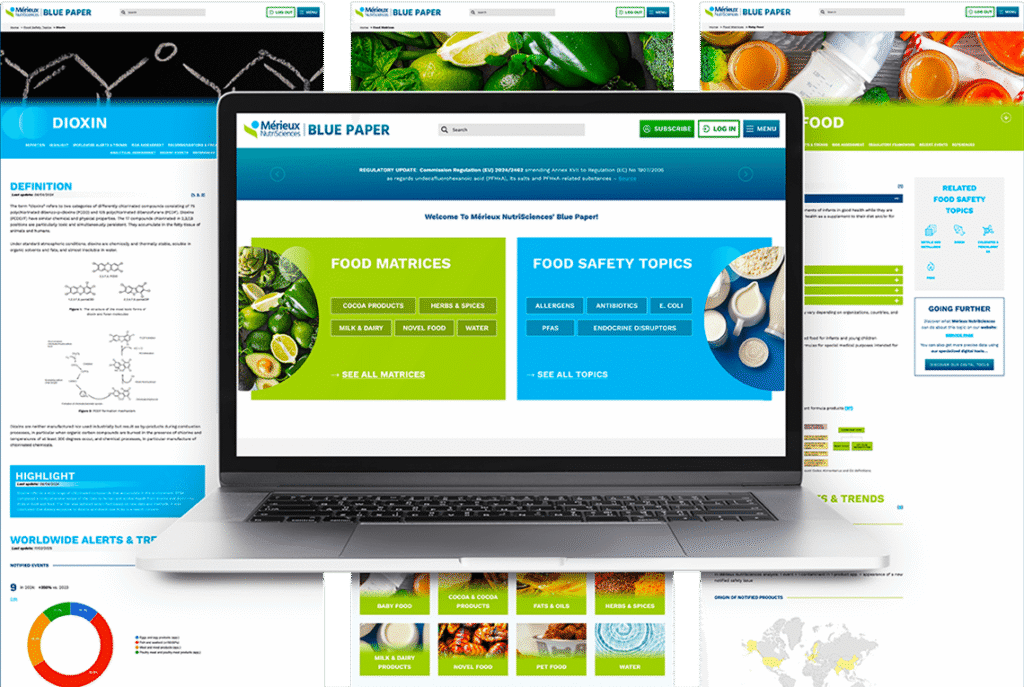
Blue Paper: Mineral Oil Hydrocarbons
Access exclusive insights from our MOH experts on the Blue Paper platform, including analyses of food safety, quality and sustainability trends and regulatory updates.