The 2026 theme, “From burden to solutions – safe food everywhere”, strongly aligns with the mission of Mérieux NutriSciences. Drawing on over 50 years of scientific expertise, we provide the food industry with innovative solutions to meet its evolving needs. We help ensure global food safety, health, and sustainability through a complete range of services, including microbiology testing, nutritional analysis, audits, packaging, labeling and regulatory support and more.
The Current Burden of Foodborne Disease
Foodborne diseases remain a major issue worldwide. According to the WHO:
600 million people (nearly 1 in 10 globally) fall ill from contaminated food each year.
Foodborne diseases result in 420,000 deaths annually.
Children under 5 carry 40% of this burden, accounting for 125,000 deaths per year.
In 2026, the WHO is expected to release its updated Foodborne Disease Burden Report, providing the first national-level estimates by hazard, enabling more localized, effective action.
“From Burden to Solutions” – Why the World Food Safety Day 2026’s Theme Resonates
“Foodborne diseases continue to impose a heavy burden, but they are largely preventable,” said Markus Lipp, Senior Food Safety and Quality Officer from FAO. “Through science-based standards and close collaboration with governments, FAO will continue to support tailored solutions that turn data into action and strengthen national food control systems.”
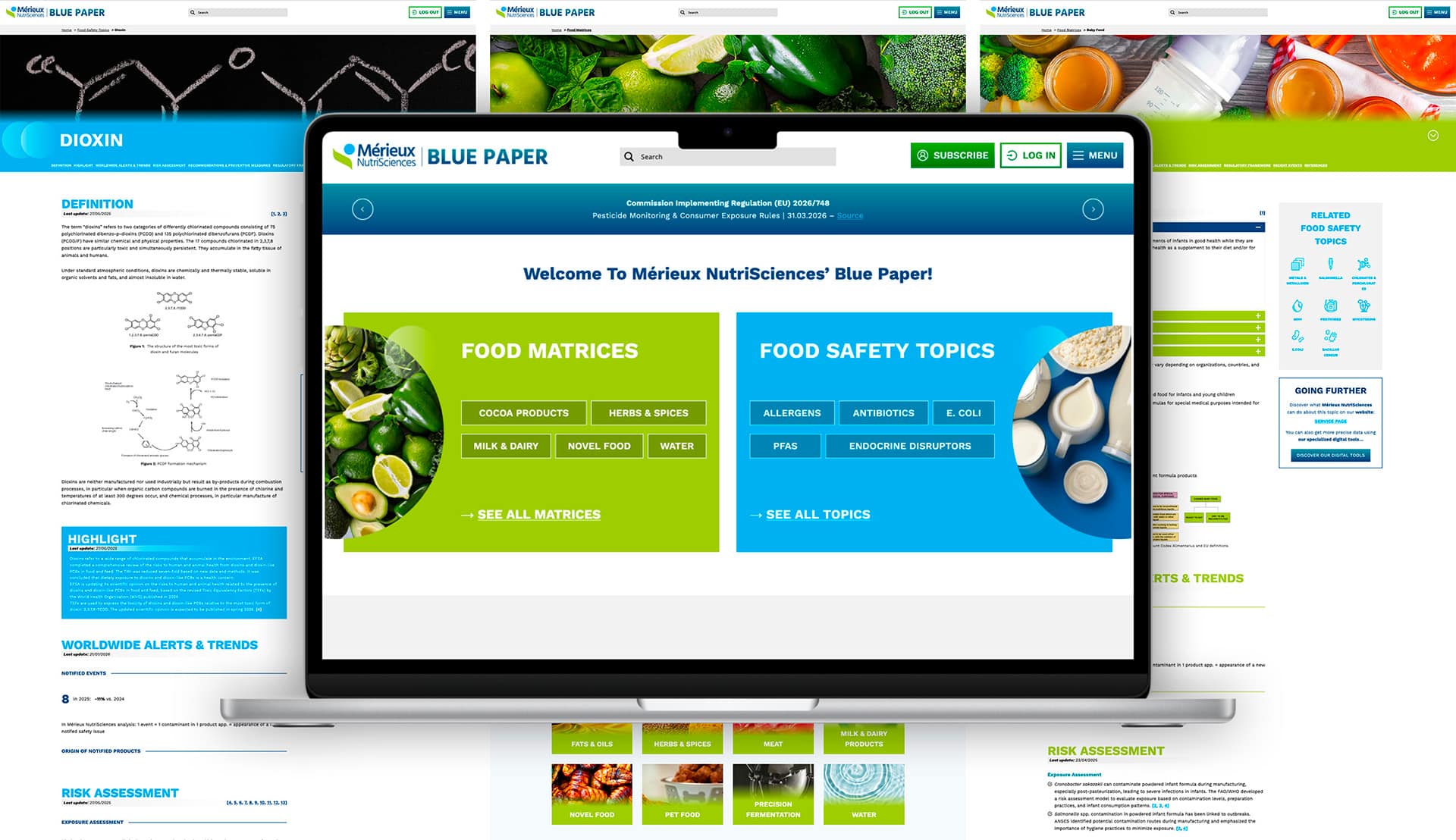
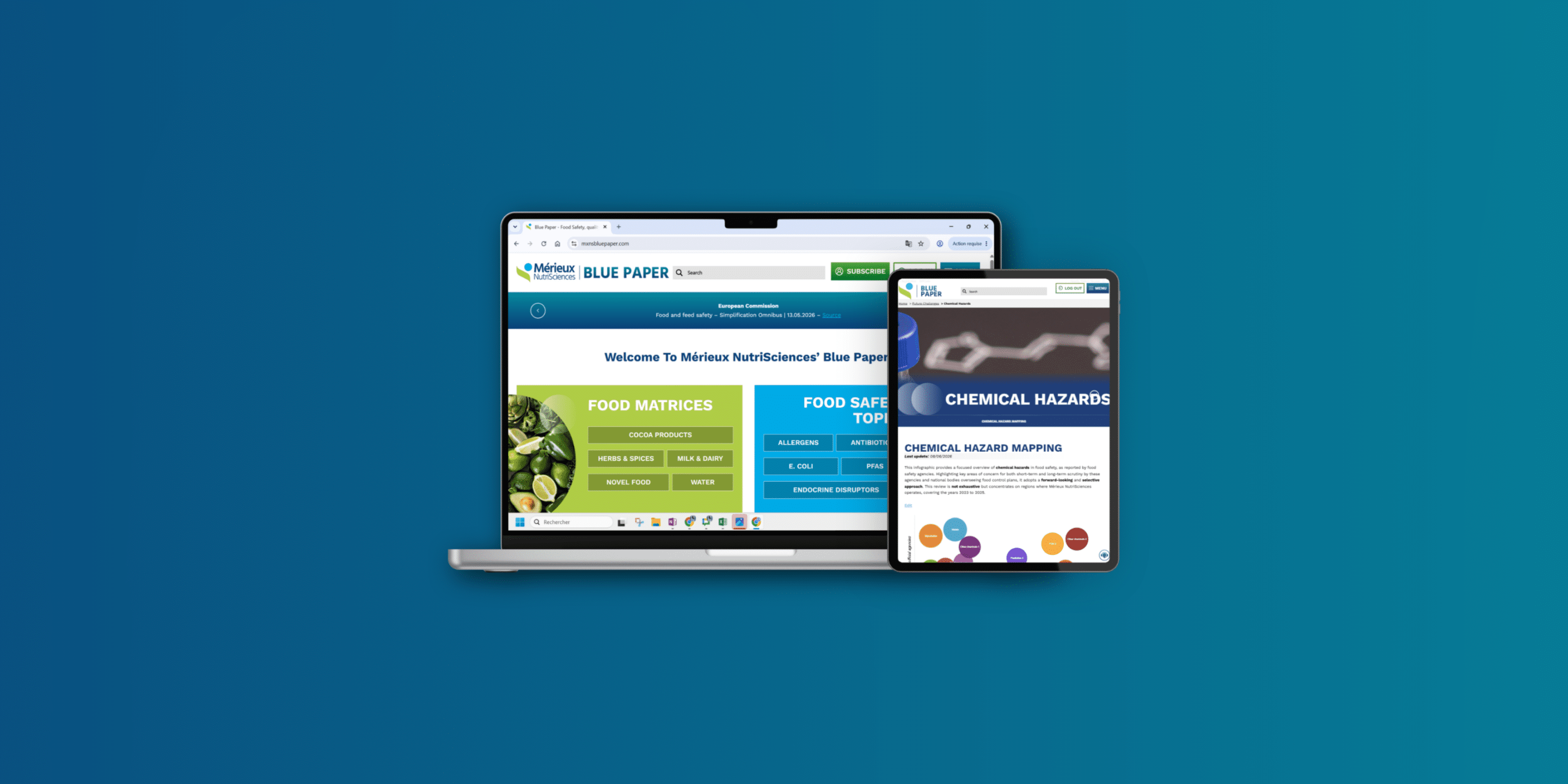
Our 2026 Blue Paper update was conducted by a global network of over 120 experts to bridge the gap between scientific and technical complexity and operational decision-making for food safety professionals across global supply chains.
“The Blue Paper streamlines food safety management by condensing vast amounts of scientific literature into a single, highly structured resource. Its standardized format across all topics allows professionals to bypass hundreds of individual publications and quickly locate actionable insights. By aligning chapters directly with specific industry interests, it enables users to navigate seamlessly and extract the precise information they need for their current priorities.”
Muriel Dubos, Technical Director Microbiology EMEA, Analytical HUB
Key Food Safety Challenges – Insights from our Blue Paper Experts
The 2026 revision of the Blue Paper covers 15 food matrices, including new additions such as poultry, fish, fruits and vegetables, and food supplements. Additionally, it addresses 32 safety topics across microbiological and chemical hazards.
Microbiological Risks
Pathogens remain one of the leading causes of foodborne illness:
Salmonella, Campylobacter, and enterohaemorrhagic Escherichia coli are commonly linked to undercooked meat and fresh produce.
Listeria monocytogenes poses severe risks to vulnerable populations, including the elderly, pregnant women, and infants.
The rise of antimicrobial resistance is increasing the complexity of treatment and control.
Among emerging concerns, Clostridium botulinum, which is newly incorporated into the Blue Paper, necessitates specific attention. This bacterium synthesizes highly potent neurotoxins within anaerobic environments and is typically associated with inadequately processed food products. While the incidence of botulism is rare, its potential lethality requires prompt clinical diagnosis and intervention.
“While dry powders do not typically support active microbial growth, they may serve as vectors for persistent spores introduced via raw materials or the processing environment. The Clostridium botulinum section of the Blue Paper provides the essential framework to enhance supplier assurance protocols, environmental hygiene standards, and the implementation of advanced detection technologies, thereby reinforcing a comprehensive systems-based approach to risk mitigation.”
Michele Smoot, Senior Director of Microbiology, Analytical HUB
Additionally, Sripriya Agaram, Technical Director of Microbiology North America, Analytical HUB, provides the following technical perspective on the complexities of managing risks within the herbs and spices category:
“Treat herbs and spices as risk-bearing ingredients, not simple flavorings. Because they may be added after processing, hazards like Salmonella, lead, pesticides, allergens, and adulterants can trigger recalls and health risks. Strengthen supplier qualification, verify origin and processing controls, require validated microbial reduction treatments where needed, and use risk-based testing for pathogens, heavy metals, EtO residues, allergens, and food fraud indicators.”
Viral agents, including Norovirus and Hepatitis A, alongside various parasites and prions, further exacerbate the global burden of foodborne diseases, frequently transmitted through contaminated water sources, raw seafood, or infected animal-derived products.
Chemical Hazards
Chemical contaminants also represent a significant and growing concern:
Naturally occurring toxins (e.g., mycotoxins).
Environmental pollutants such as heavy metals and persistent organic pollutants (POPs).
Contaminants like per- and polyfluoroalkyl substances (PFAS) are particularly challenging due to their persistence and widespread use across supply chains.
“PFAS are often ‘hidden’ in the supply chain as process aids (lubricants or coatings). Their chemical resistance ensures long environmental persistence: they do not break down naturally, leading to bioaccumulation in soil, water, and finally animal and human tissue. They pose health risks, including hormonal disruptions, reduced fertility, and higher cancer risks. Authorities, notably in the EU, are establishing regulatory limits and pushing to replace them wherever feasible. It is essential to limit exposure through a well-defined analytical plan capable of monitoring both finished products and raw materials.”
Paolo Matteini, Technical Director Chemistry EMEA
“Recently, heavy metals in the food supply seem to be getting more attention than ever. That strikes me as strange, because if anything in our food has always been there, it’s heavy metals. More accurately described as toxic elements, they have long existed in the natural world, and in the industrial world we’ve shaped. Because toxic-element concentrations vary by geography, shifts in the supply chain can materially change the levels found in finished products. Careful monitoring, paired with rigorous supplier qualification, helps prevent unexpected spikes to potentially unsafe levels.”
Walter Brandl, Technical Director, Chemistry North America
Turning Knowledge into Action
World Food Safety Day 2026 is a clear reminder: the burden of foodborne disease is real, measurable, and largely preventable. At Mérieux NutriSciences, our mission is to transform scientific innovation into actionable food industry solutions. The Blue Paper was specifically developed to empower food safety professionals by transforming complex data on safety, quality, and sustainability into clear, actionable insights. By synthesizing evolving global regulations and emerging contaminant trends, this resource enables decision-makers to manage immediate risks while proactively preparing for the challenges of tomorrow.
Access the 2026 Version of the Blue Paper:
2026 Update of the Blue Paper – Demo Video
Request your full access and discover how our expert insights turn complex data into actionable solutions for safer food systems worldwide!